Stories Told in Stitches
- Museum of Cornish Life
- January - July 2022
- An exhibition at the Museum of Cornish Life using their costume collection.
- Cultivator
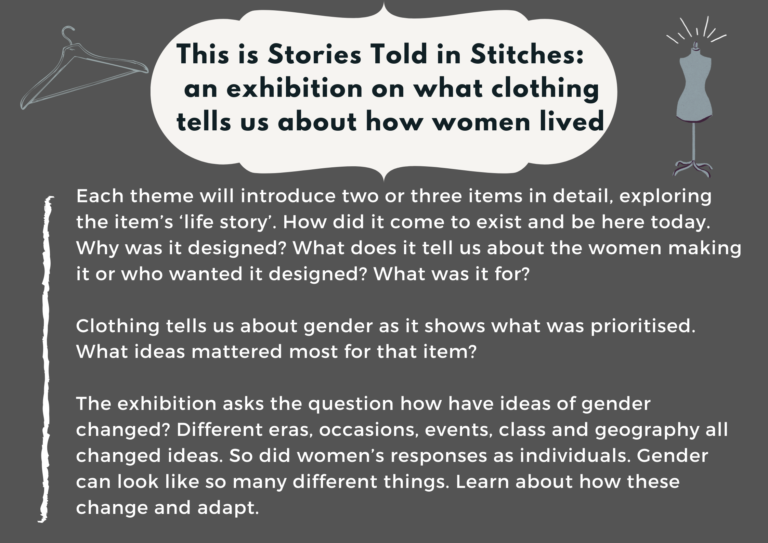
Stories Told in Stitches came from my internship at the Museum of Cornish Life. I was an Assistant Museum Curator funded by Cultivator and organised through the University of Plymouth. As I was investing so much of my time and energy into my work, it made sense for it to become my Dissertation Project. I produced an exhibition for the museum and analysed my work and how I applied certain theories. This acted as my Dissertation project for MA Heritage Theory & Practise.
The research and analysis looked into how Daybell et al.’s Gendering theory could be applied to a small regional museum. This approach involved looking deeply into each object’s life story and examining what stories were unearthed that are typically overlooked—such as those about gender. Inherently intersectional, this allowed a dress worn by a rich white woman to represent the stories of those who produced the raw materials, transported them, made it, and more.
The exhibition itself explored the theme of gender – how it is a social construct and clothing can illustrate how much expectations have changed over time.
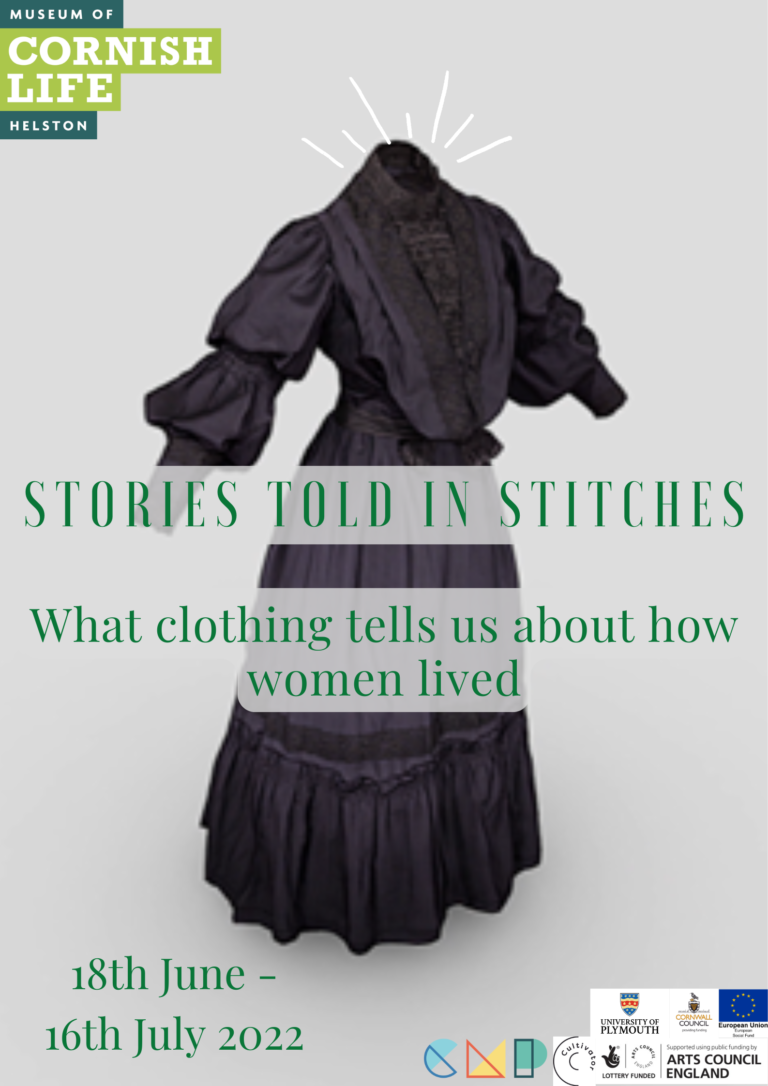
The main marketing of the exhibition focused around this image of the mourning dress featured in the exhibition. The image is a still from an earlier project where certain items had been 3D scanned. This helped position the exhibition within the existing offer and programming of the museum.
I also wrote and designed all the interpretation material for the exhibition. This was an amazing chance to put my new theoretical knowledge and advise on interpretation writing into practise. This was especially useful in creating interpretation around complex topics.
Even though this work improved on my previous work, it’s really interesting to look back now and see what I could have improved!
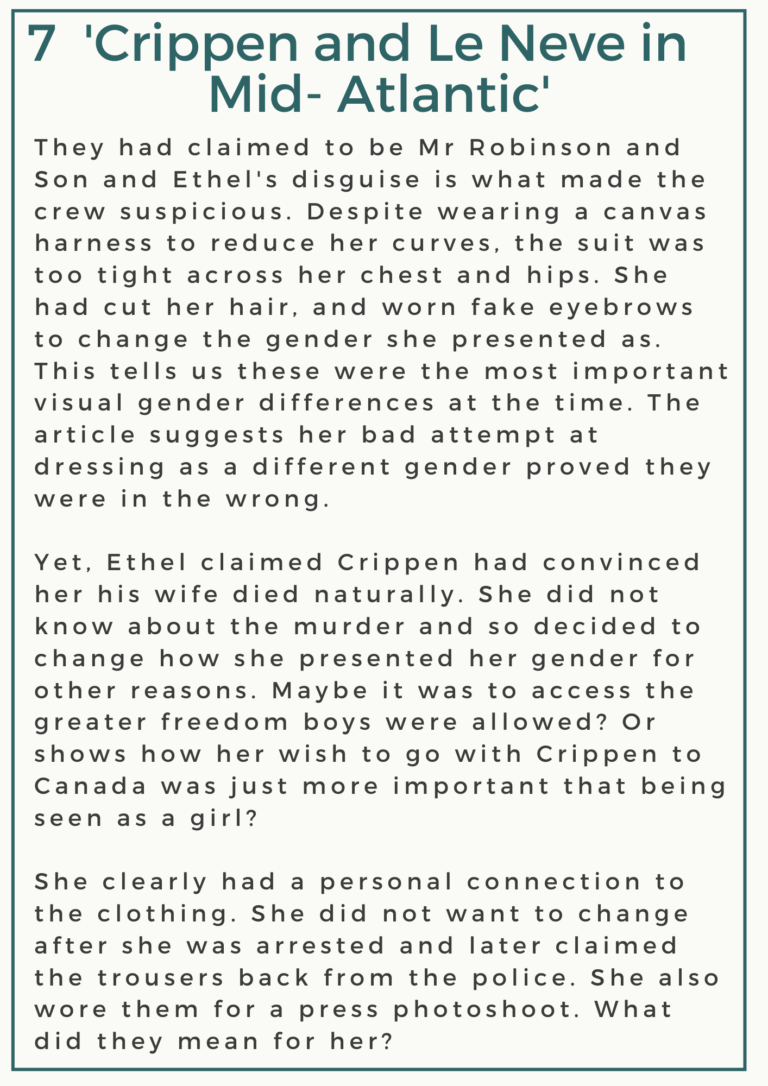
The exhibition had three sections: Ideal Body Shape, Working Women, and Breaking Expectations. These sections allowed me to explain things through the public’s existing knowledge about gender and its history.
For each section, I chose specific items to explore the life stories of using the Gendering methodology. This was incredibly hard at times as little to no information was recorded with the item’s donations, which meant a lot of time spent researching and in the archives. All the information was then available for the museum to add to their CMS.